.png?width=300&height=46&name=info.furuno.iths-fshubfsLOGOSCorporate%20Color%20Display(Reverse).png "info.furuno.iths-fshubfsLOGOSCorporate Color Display(Reverse)")
3 Min read
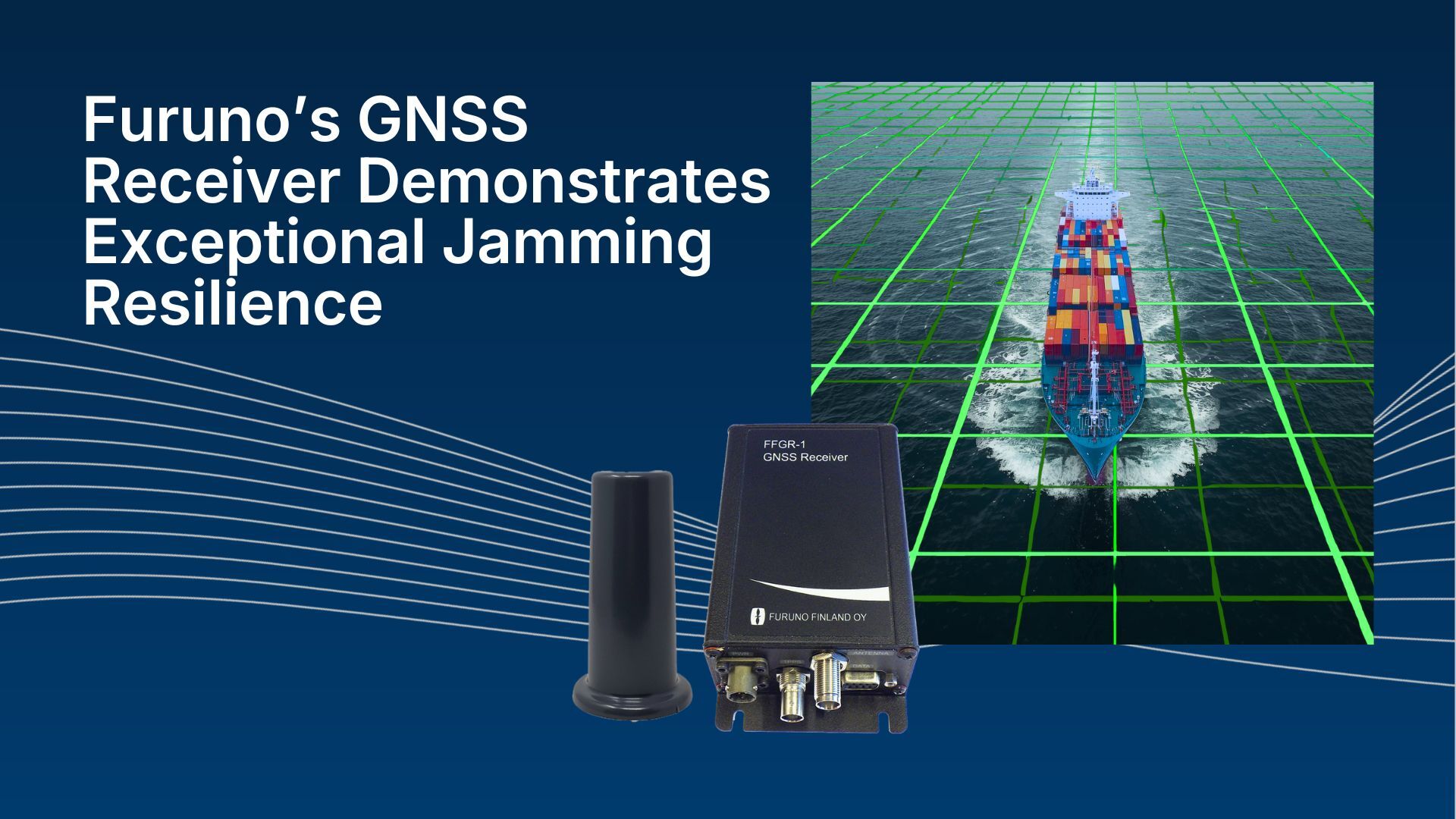
The Furuno FFGR-5 GNSS Receiver, independently tested by a researcher at Gdynia Maritime University, demonstrated exceptional resilience against jamming, maintaining stable positioning under intense interference, unlike standard receivers, which failed immediately.
As GNSS interference evolves from an occasional nuisance to a persistent navigational risk, particularly in high-traffic regions like the Baltic and North Seas, shipowners are seeking reliable solutions to safeguard their operations. Recent independent tests conducted at Gdynia Maritime University have confirmed the superior jamming resilience of the Furuno FFGR-5 GNSS Receiver, offering a robust answer to this growing challenge.
Addressing a Critical Maritime Challenge
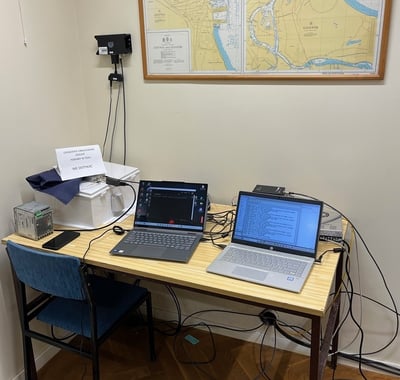 Dr. Jarosław Cydejko, a leading researcher at Gdynia Maritime University, has spent over two years documenting GNSS interference patterns and their impact on maritime navigation. His work has highlighted the increasing frequency of jamming and spoofing incidents, especially in northern European waters, prompting shipowners to seek effective countermeasures.
When Furuno Finland introduced the FFGR-5 GNSS Receiver, equipped with the Tallysman AJ997XF anti-jamming antenna, Dr. Cydejko led an independent evaluation to assess its performance under controlled jamming conditions. The results were clear: the FFGR5 maintained stable positioning throughout all tests, while standard single-frequency receivers lost their signal almost immediately.
Rigorous Testing, Clear Results
 The evaluation involved 16 comprehensive test sessions, simulating real-world interference scenarios:
• Jamming from low elevation angles
• Four distinct jamming structures (AWGN, matched GPS C/A code jamming, wideband noise, and CW interference)
• Multi-constellation operation (GPS, Galileo, BeiDou, GLONASS)
• Continuous monitoring of HDOP, satellite usage, and differential mode behavior
Despite exposure to intense interference, the FFGR5 demonstrated remarkable stability:
• Minimal HDOP increase (typically 0.1–0.3)
• Consistent use of 12 satellites, even when masking low-elevation signals
• Stable positioning, supported by redundant multi-constellation coverage
These results underscore the limitations of conventional GPS receivers, which struggle to maintain accuracy even under modest interference near coastlines, ports, or industrial zones, especially in the Baltic region, where GNSS disruptions have been widely observed.
Why This Matters for Shipowners
GNSS disruptions are no longer rare events, they are a recognized operational risk, particularly in conflict zones or areas with heavy industrial or military radio activity. As incidents become more frequent, the maritime industry is shifting toward multi-band, multi-constellation receivers paired with anti-jamming technology, a solution that offers better navigational resilience.
Furuno offers a suite of GNSS Positioning and Timing Solutions for vessels operating in high-risk areas, including the FFGR-1 and FFGR-5 receivers along with the FFSP-100 monitoring unit. Together, these tools provide crews with continuous visibility into the GNSS environment, ensuring safer navigation when interference threatens operational integrity.
A Commitment to Maritime Safety
The independent findings from Gdynia Maritime University provide invaluable insights into how modern GNSS receivers perform under real-world conditions. Furuno extends its gratitude to Dr. Cydejko for his dedication to advancing maritime safety through rigorous research and transparent testing.
Learn more about Furuno’s Anti-Jamming and Spoofing System and how it can enhance your vessel’s resilience against interference!